Key Takeaways
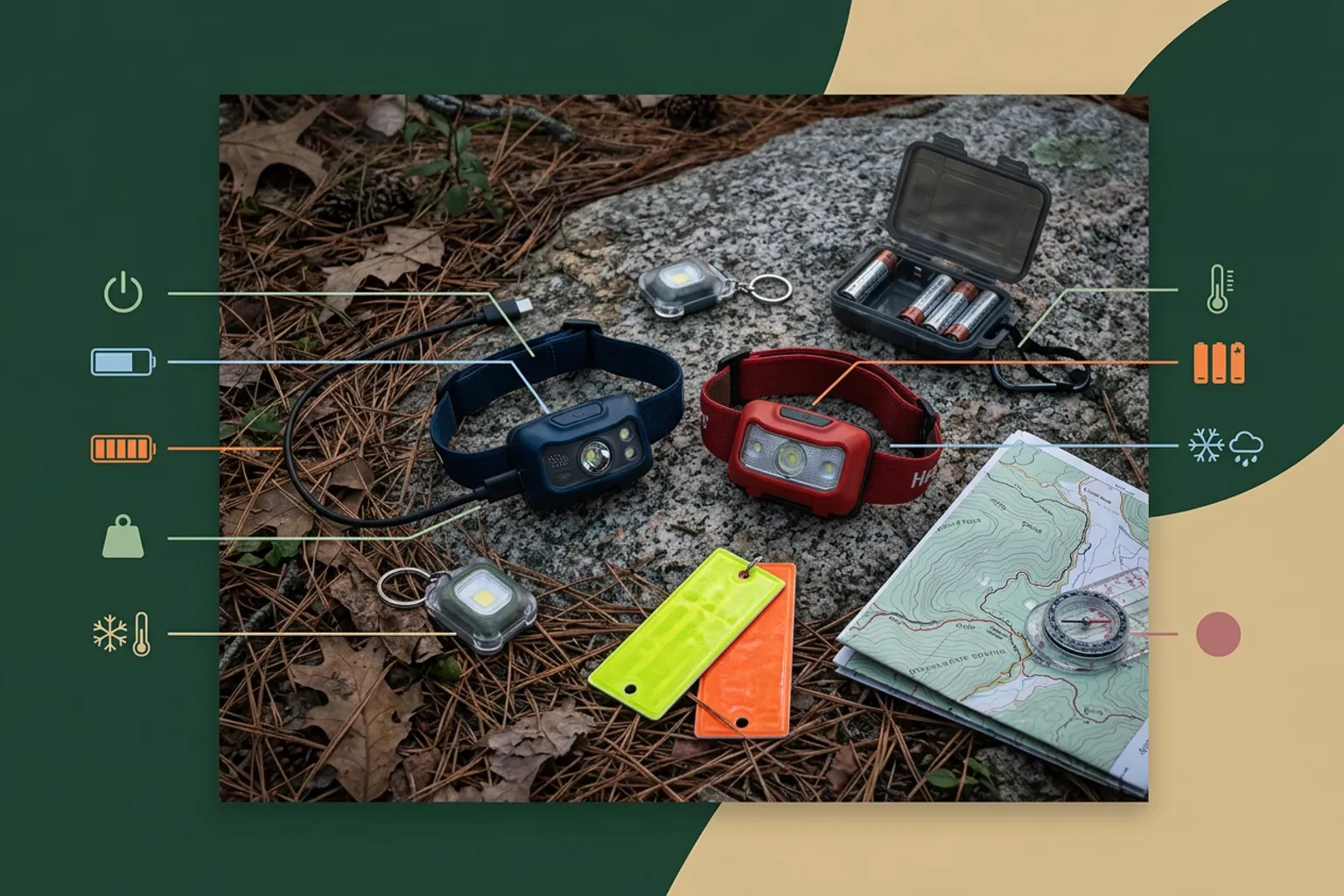
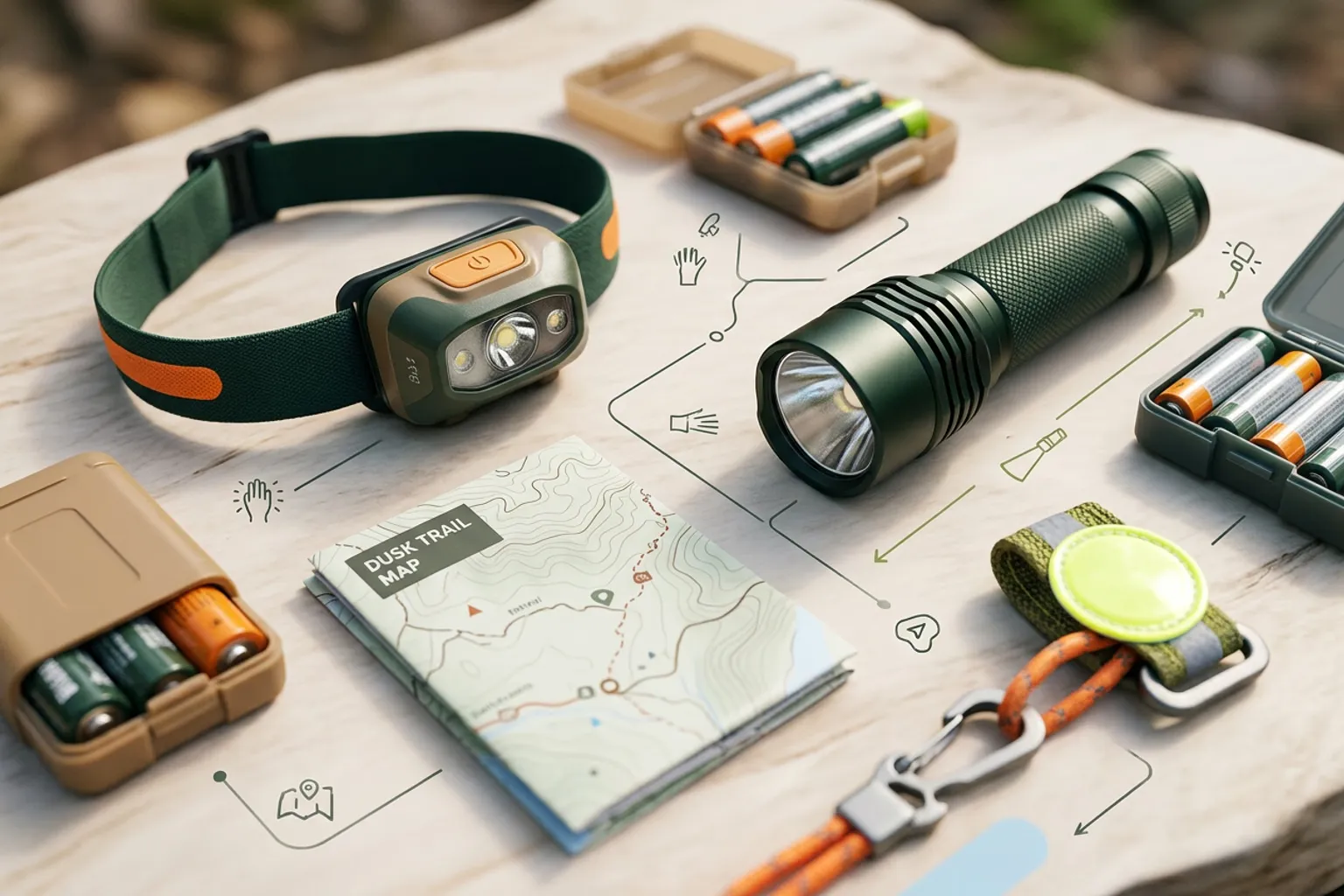
- Use a headlamp as the primary hiking light when you need both hands available for movement and trail tasks.
- Use a small flashlight for directional checks, signaling, or as an independent backup.
- A mini headlamp is the most versatile single choice; a two-light system is safer when darkness is likely.
- Runtime, controls, lockout, beam shape, and battery confidence matter more than peak brightness.
How this guide was built
Fopoto reviews headlamp vs flashlight for hiking: which is better? through a compact-kit lens: brightness, runtime, beam pattern, backup power, and visibility after dusk. We start with the safety baseline, then cut anything that adds bulk without covering a realistic field problem. This guide is written for the practical search intent behind headlamp vs flashlight for hiking and related questions like what light should hikers carry, hands-free hiking light, hiking flashlight backup.
Headlamp vs Flashlight for Hiking: Which Is Better? is not about buying more gear. It is about building a small, repeatable system for hiking that still works when the day gets longer, colder, wetter, or more confusing than planned.
| Layer | What it covers | When to pack it |
|---|---|---|
| Headlamp | Hands-free walking, poles, cooking, first aid | Best primary light for most hikers |
| Small flashlight | Directional beam, distant signs, signaling | Best companion or backup |
| Mini headlamp | Compact daypack backup and slow exit | Best one-light emergency option |
| Phone torch | Brief close-range task | Last resort, not a hiking light |
Why is a headlamp better for hiking movement?
A headlamp points where you look and keeps both hands available for trekking poles, balance, opening a jacket, checking a map, or helping another walker. A broad, even beam also makes it easier to read roots, rocks, and trail edges without constantly aiming your wrist.
Fit and controls matter: the lamp should stay stable, switch modes with gloves, and resist accidental activation inside the pack.
When is a flashlight more useful?
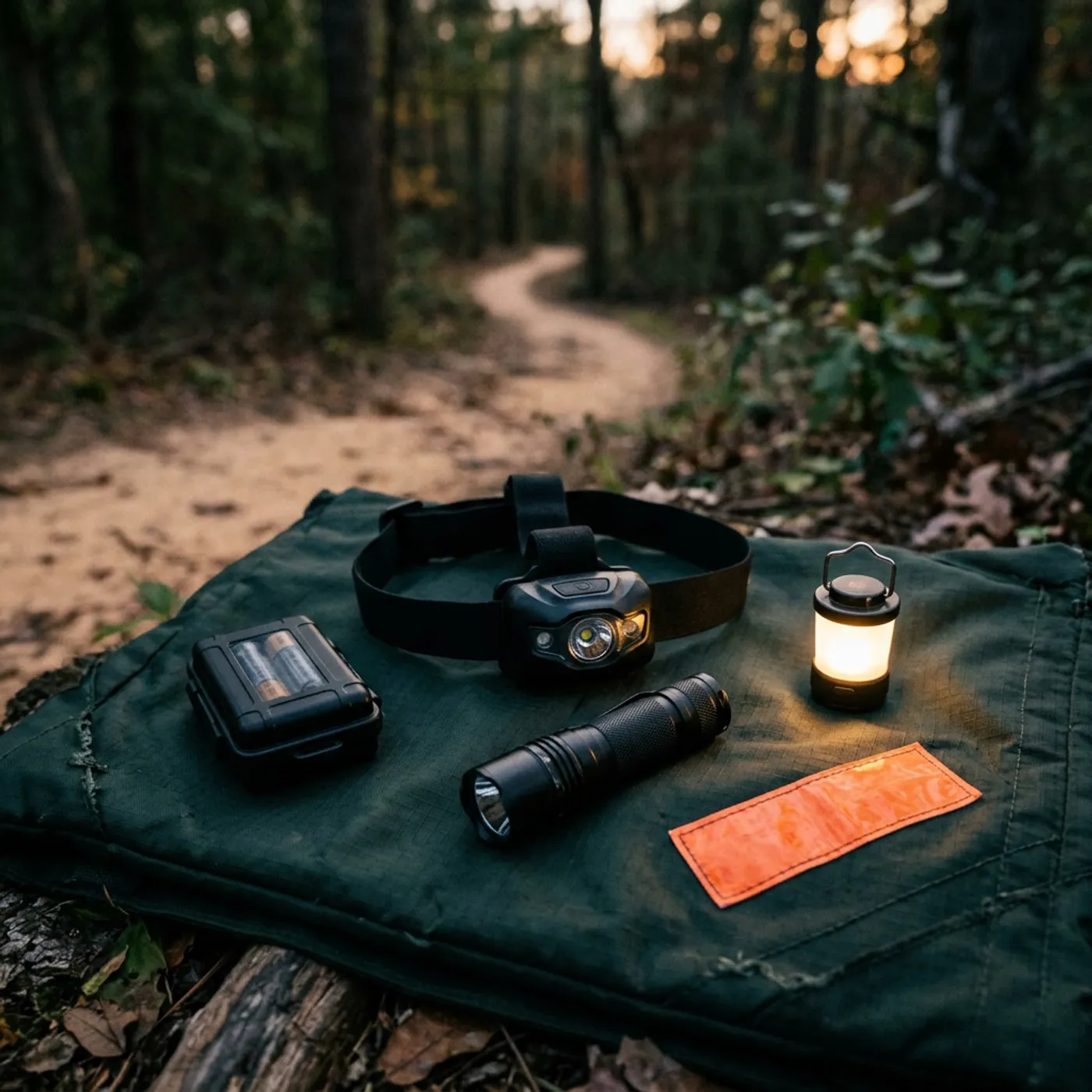
A small flashlight gives precise beam control for reading distant signs, checking a junction without turning your head, signaling, or lighting an object from a different angle. It can also preserve the headlamp battery during short checks around camp.
Do not carry a large flashlight just for brightness. A compact independent light is easier to keep permanently in a daypack.
Should hikers carry both?
Carry both when the route intentionally includes darkness, the finish time is uncertain, or the group depends on one primary lamp. Keep the backup in a fixed pocket and power it independently where possible so one charging mistake does not disable both lights.
A practical pair is one comfortable headlamp plus one small flashlight or mini headlamp.
Compact checklist
- Main safety item for the route, season, and time of day.
- Specific plan for a late return, a light that steps down too quickly, glare that ruins footing, or a battery that is not charged when the trail gets dark.
- Backup light or backup power if the trip can run late.
- Weather layer that works for both wind and rain.
- Small first aid and blister kit sized for the group.
- Navigation backup that does not depend only on cell service.
- Carry rule: choose one primary light you enjoy using and one tiny backup that lives in the same pouch.
Frequently asked questions
Is a headlamp or flashlight better for hiking?
A headlamp is better as the primary hiking light because it keeps both hands free and follows your line of sight. A flashlight is useful for focused checks, signaling, and independent backup.
Should I carry a flashlight if I already have a headlamp?
Carry a small flashlight or mini headlamp when darkness is likely or a delayed return is possible. It protects against battery failure, accidental activation, damage, loss, or lending the main light to someone else.
Can a phone flashlight replace a hiking headlamp?
No. A phone torch is awkward for walking, drains navigation and communication power, and is difficult to use hands-free. Keep it as a last resort rather than the primary or only backup.
Sources
- National Park Service: Ten Essentials, retrieved July 25, 2026. Official hiking guidance recommends illumination, preferably a hands-free headlamp, plus spare batteries.
- National Park Service: Hike Smart, retrieved July 25, 2026. Official guidance on essential gear, route planning, weather checks, and emergency preparation.
- National Park Service, Ten Essentials , retrieved July 25, 2026. Used as the safety baseline for compact outdoor packing systems.
- American Red Cross, First Aid Kit guidance , retrieved July 25, 2026. Used for first-aid kit scope and emergency-preparedness checks.
- Fopoto Editorial Policy, updated July 25, 2026. Explains the scenario-first review method, AI-assisted image disclosure, and source standards.
- Fopoto Field Desk, updated July 25, 2026. Describes the editorial team, review boundaries, correction path, and compact-kit evaluation method behind this guide.
Updated July 25, 2026 / 7 min read