Key Takeaways
- Do not keep walking simply to make the map match a guess.
- Use local rescue guidance for emergency contacts and whistle signals.
- After contacting rescuers, avoid changing location without telling them unless immediate danger requires it.
How this guide was built
Desk-researched emergency planning guidance, reviewed October 15, 2026. This is not a rescue assessment or a substitute for local emergency instructions.
The first useful action after losing the route is to stop making the uncertainty larger. Stabilize your situation, work out what you actually know, and contact help when you cannot resolve the problem safely. A whistle is a signaling tool within that plan; it is not a guarantee that somebody can hear you.
| Layer | What it covers | When to pack it |
|---|---|---|
| Location | Known trail, junction, coordinates, last certain point | Separate confirmed facts from guesses |
| Conditions | Daylight, weather, injury, usable shelter | Decide whether resolving the route is still safe |
| Contact | Local emergency service and your trip contact | Report location, situation and planned actions |
Stop before the next uncertain turn
Find a safe place away from immediate hazards and compare the route, landmarks and last confirmed position. Our planning suggestion is to name what is known aloud or in a note before choosing another direction. Do not attempt an uncertain shortcut to a road or stream just because it looks close on the screen.
Move out of immediate danger when necessary; stopping does not mean staying on an unsafe slope or road.
What should you tell the person helping you?
Share your location or last known point, the number of people, injuries or urgent needs, weather and remaining light. Say how much phone power you have and what you intend to do next. Keep a record of any instruction you receive so a tired group does not interpret it differently.
Use the local emergency number and rescue procedure for the country and park you are in.
How should you use a whistle if you need help?
Check the rescue convention for your destination before departure. Mountain Rescue England and Wales advises six long whistle blasts or torch signals over one minute, followed by a minute of silence, repeated until help reaches you. Other jurisdictions may teach a different pattern. Keep the whistle reachable and tell rescuers if you are signaling.
This England and Wales example is not a worldwide rule. Sound may be blocked by terrain, wind or distance; do not treat silence as proof nobody is searching.
Sources for this section: Mountain Rescue England and Wales: Stay safe
Preserve your remaining options
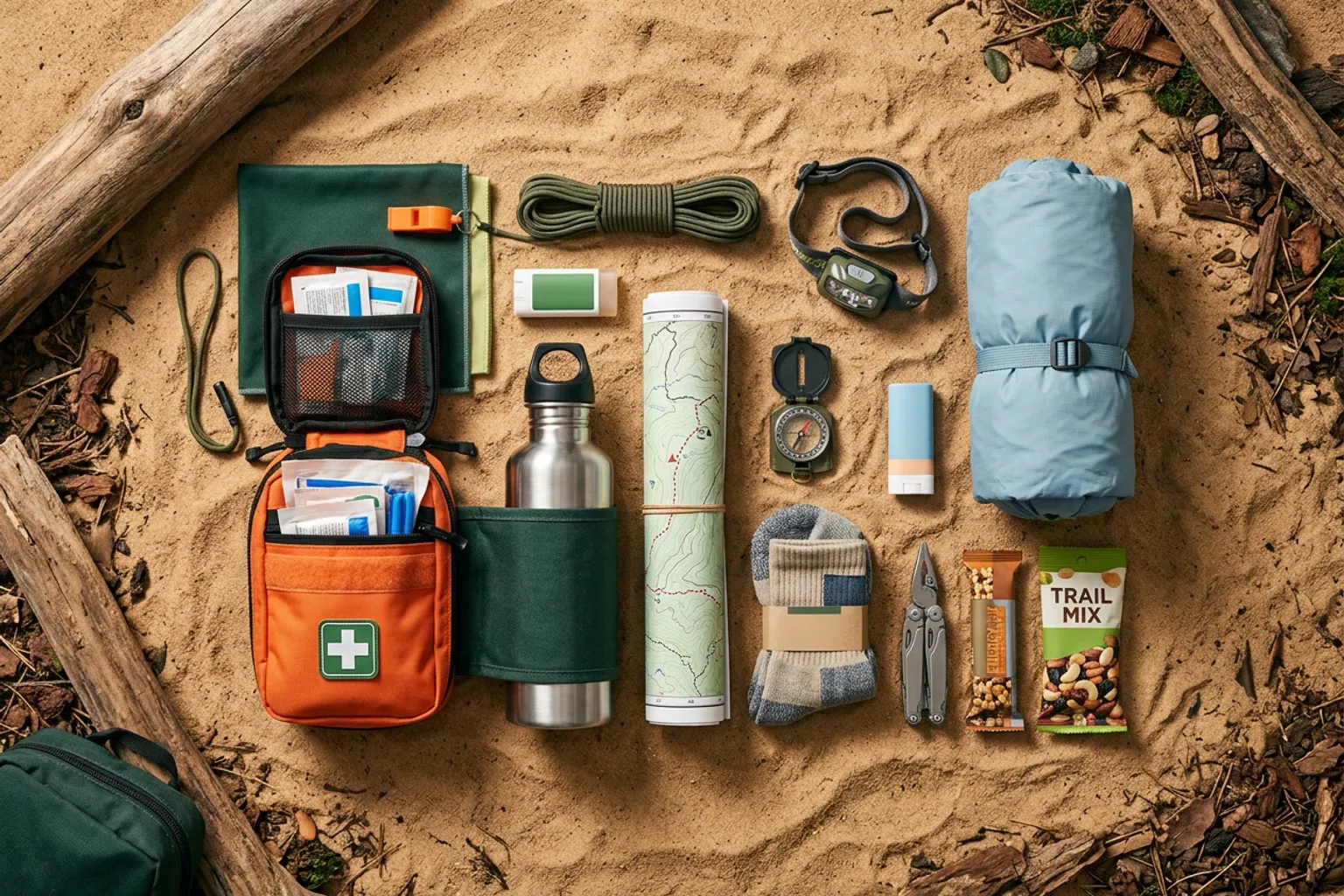
Protect yourself from exposure, keep the group together where safe, and conserve power for navigation and communication. Once you have contacted rescuers, follow their directions about staying or moving. Our kit suggestion is a reachable safety pouch rather than essential items scattered at the bottom of a pack. Before your next trip, plan a solo hike and check-in with a contact who has agreed to act.
A functioning light, weather protection and a trip plan help manage delay; they do not make an unsuitable route safe.
Compact checklist
- Main safety item for the route, season, and time of day.
- Specific plan for a plan that runs late, gear that gets wet, a phone that dies, or one missing item that turns a small problem into a long delay.
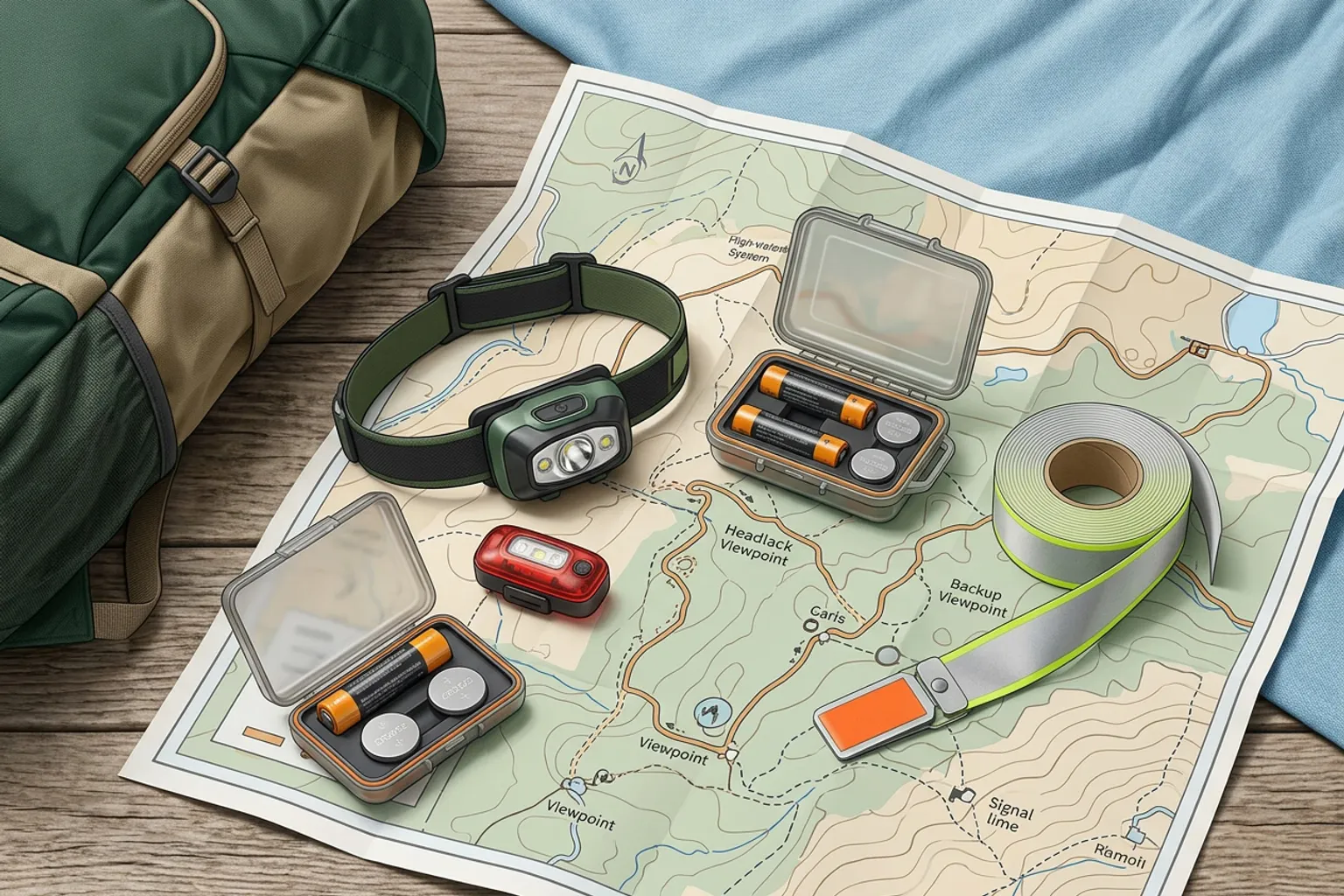
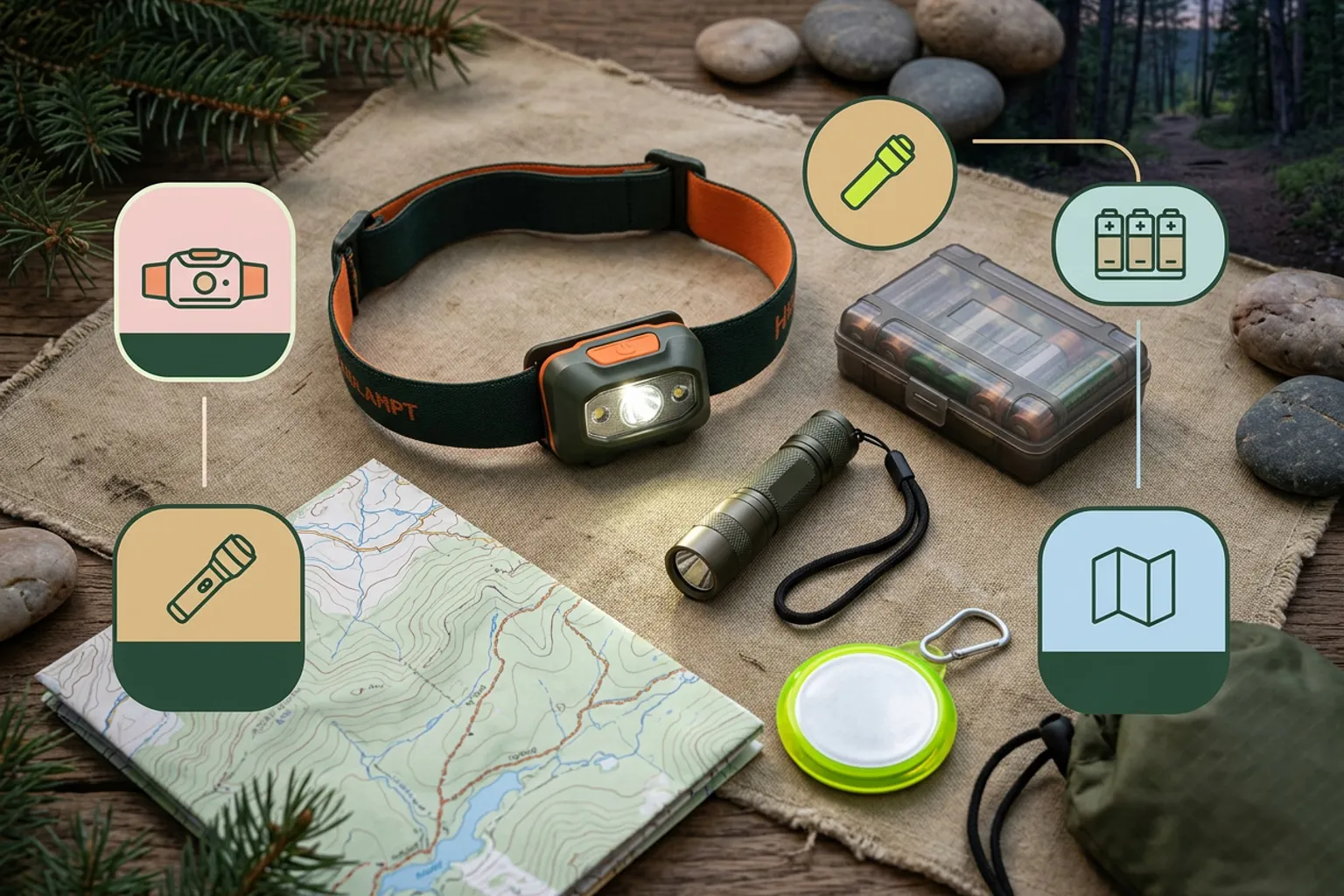
- Backup light or backup power if the trip can run late.
- Weather layer that works for both wind and rain.
- Small first aid and blister kit sized for the group.
- Navigation backup that does not depend only on cell service.
- Carry rule: make every carried item answer a specific failure point before it earns space in the kit.
Frequently asked questions
Is three whistle blasts a universal hiking distress signal?
No single pattern should be assumed worldwide. Read the official rescue guidance for your destination. England and Wales mountain rescue guidance specifies six signals in a minute, a minute pause, then repetition.
Should I move after calling for mountain rescue?
Follow the rescue service instructions and tell it about any necessary change of location. The England and Wales guidance says not to change position until contacted by the rescue team; immediate danger still requires an appropriate response.
Sources
- Mountain Rescue England and Wales: Stay safe , retrieved October 15, 2026. England and Wales rescue guidance, including the six-signal pattern; not a universal distress convention.
- National Park Service: Hike Smart , retrieved October 15, 2026. Route choice, trip plans, emergency preparation and limits. Local park instructions take priority.
Updated October 15, 2026 / 8 min read