Key Takeaways
- Seeing the route and being seen by traffic are different jobs; plan for both.
- For organized road walks, front, rear, and side visibility matter more than one very bright forward beam.
- Keep event contacts, route details, phone power, and a compact warm layer accessible without unpacking the whole bag.
- A small backup light should stay separate from the primary walking light and phone.
How this guide was built
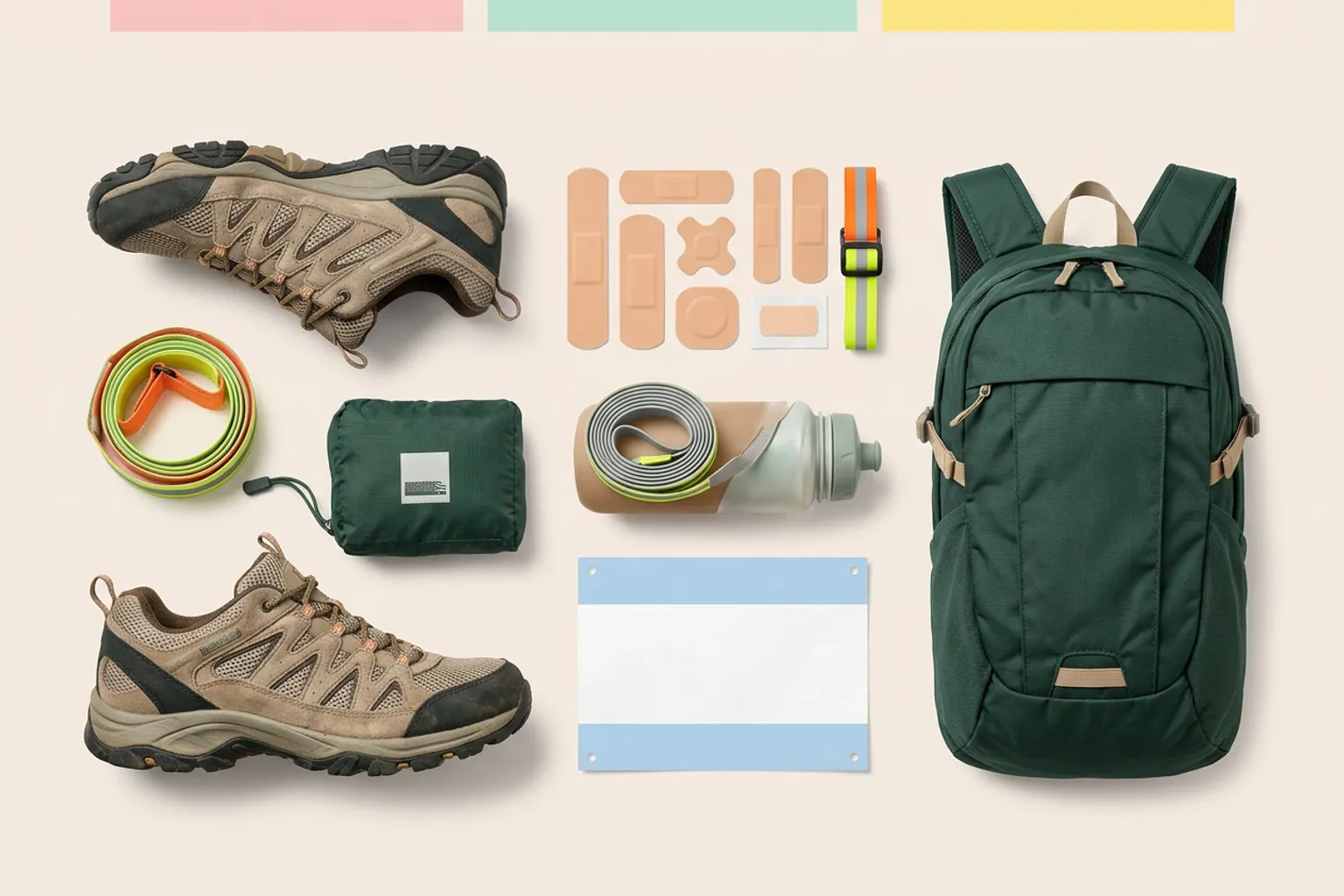
Fopoto reviews night walk event safety checklist through a compact-kit lens: foot care, visibility, hydration, weather changes, and phone battery planning. We start with the safety baseline, then cut anything that adds bulk without covering a realistic field problem. This guide is written for the practical search intent behind night walk event safety checklist and related questions like night walking safety tips, visibility gear for night walks, night walk packing list.
Night Walk Event Safety Checklist is not about buying more gear. It is about building a small, repeatable system for night walks that still works when the day gets longer, colder, wetter, or more confusing than planned.
| Layer | What it covers | When to pack it |
|---|---|---|
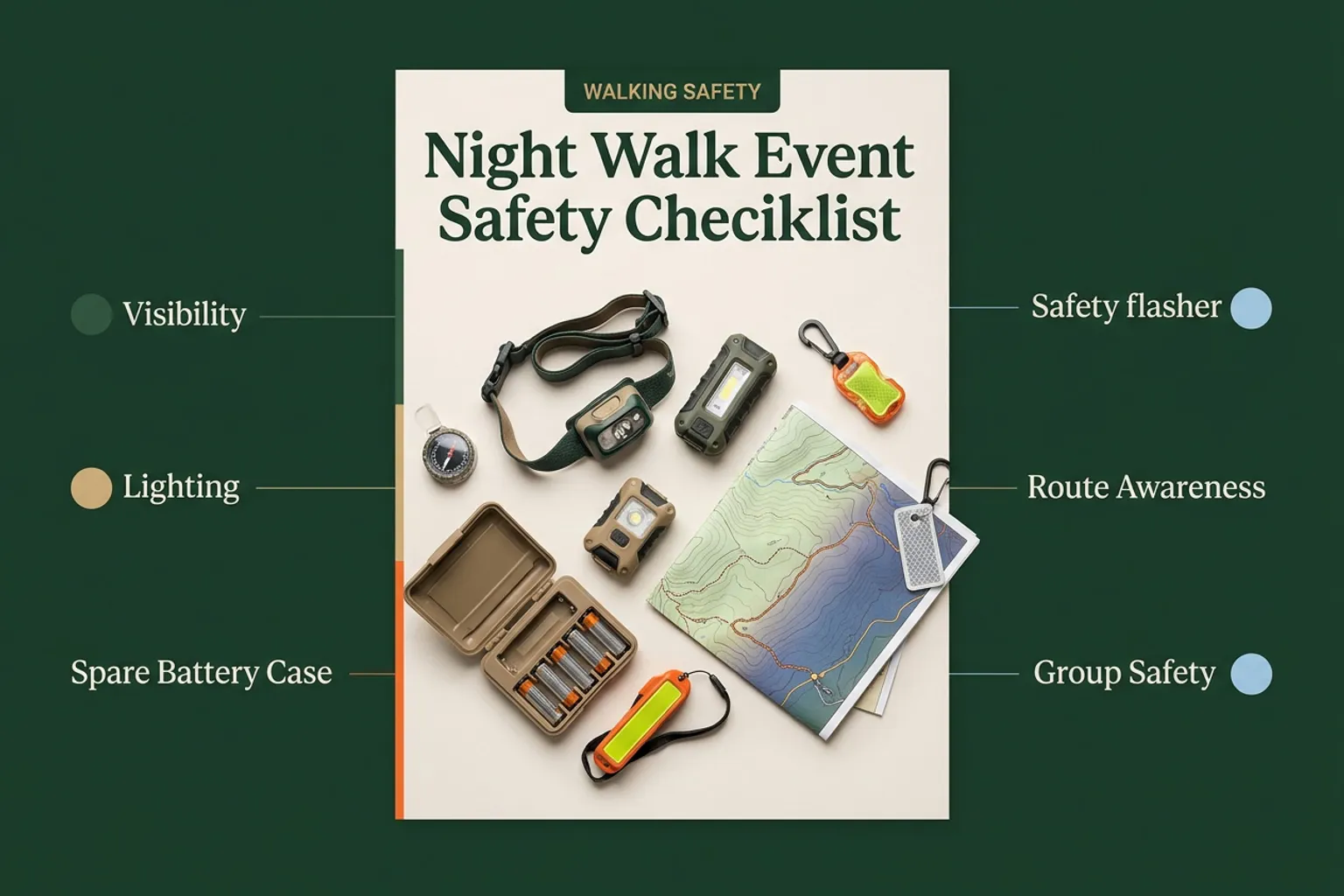
| See the route | Comfortable headlamp or handheld light with a stable low mode | Paths, steps, signs, and uneven ground |
| Be seen | Reflective bands, bright outer layer, front and rear markers | Road sections, crossings, and large groups |
| Stay connected | Charged phone, event contacts, offline route, compact power bank | Delays, separation, and route changes |
| Finish safely | Warm layer, water, snack, blister care, backup light | Slower pace or later finish than planned |
What should you bring to a night walk event?
Bring a comfortable walking light, reflective or active visibility markers, a separate backup light, event details, offline route information, phone power, water, a compact snack, blister care, weather protection, and any personal medication. In the United States, NHTSA reports that 76% of pedestrian deaths in 2024 happened when it was dark, so visibility should be treated as a primary system rather than a small accessory.
The useful question is not how bright one light is. Ask whether you can see the path and whether approaching road users can identify you from more than one direction.
How should an organized group manage visibility?
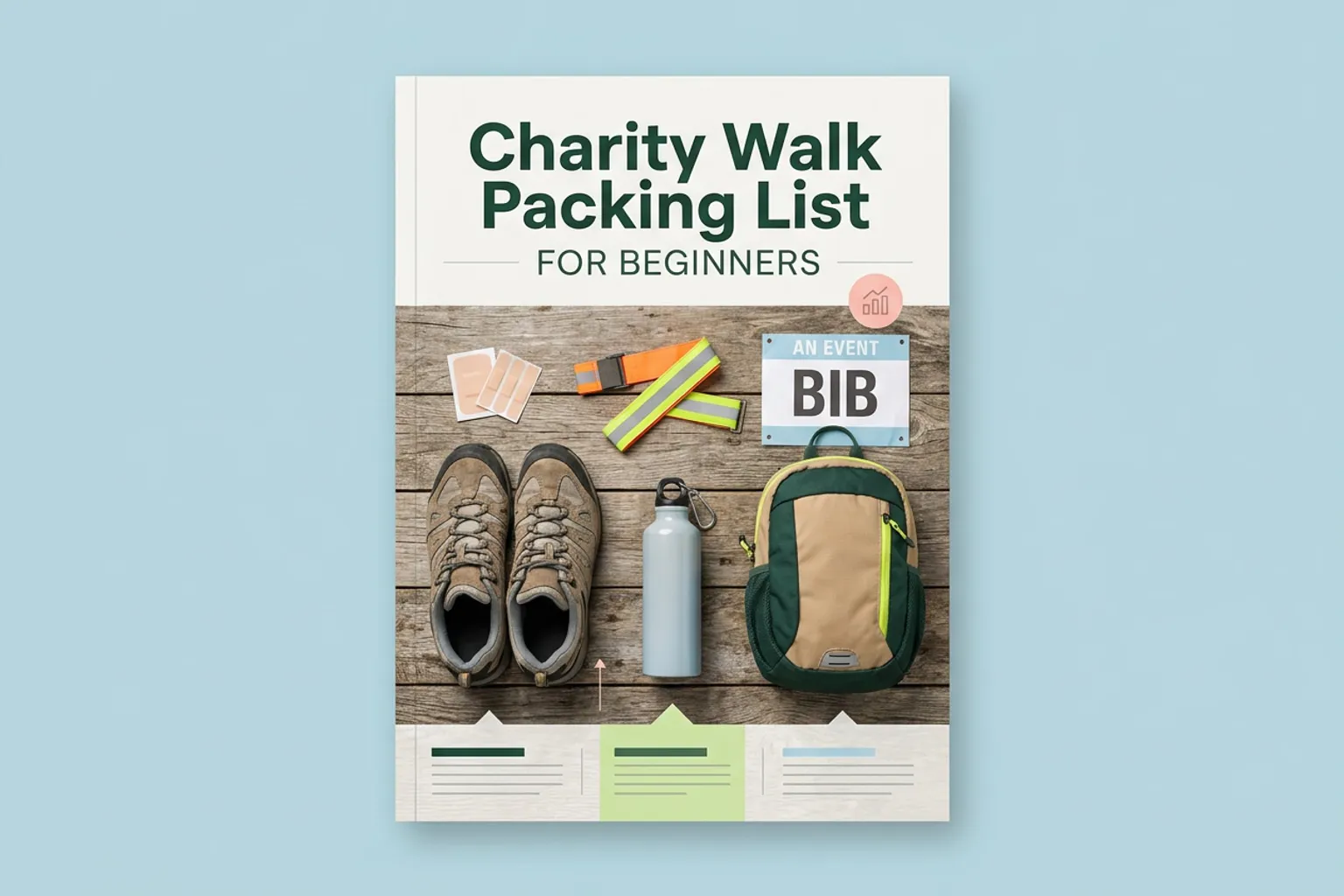
Follow the event organizer and local road rules first. The UK Highway Code advises organized groups walking on roads at night to use reflective clothing, with a white light at the front and a red light at the rear. People on the outside of a large group should also carry lights and wear reflective clothing. Keep the group plan simple enough that every participant understands it before the route starts.
A group should not rely on one person at the front to make every walker visible. Rear and side visibility cover different approach angles.
What changes when the route runs late?
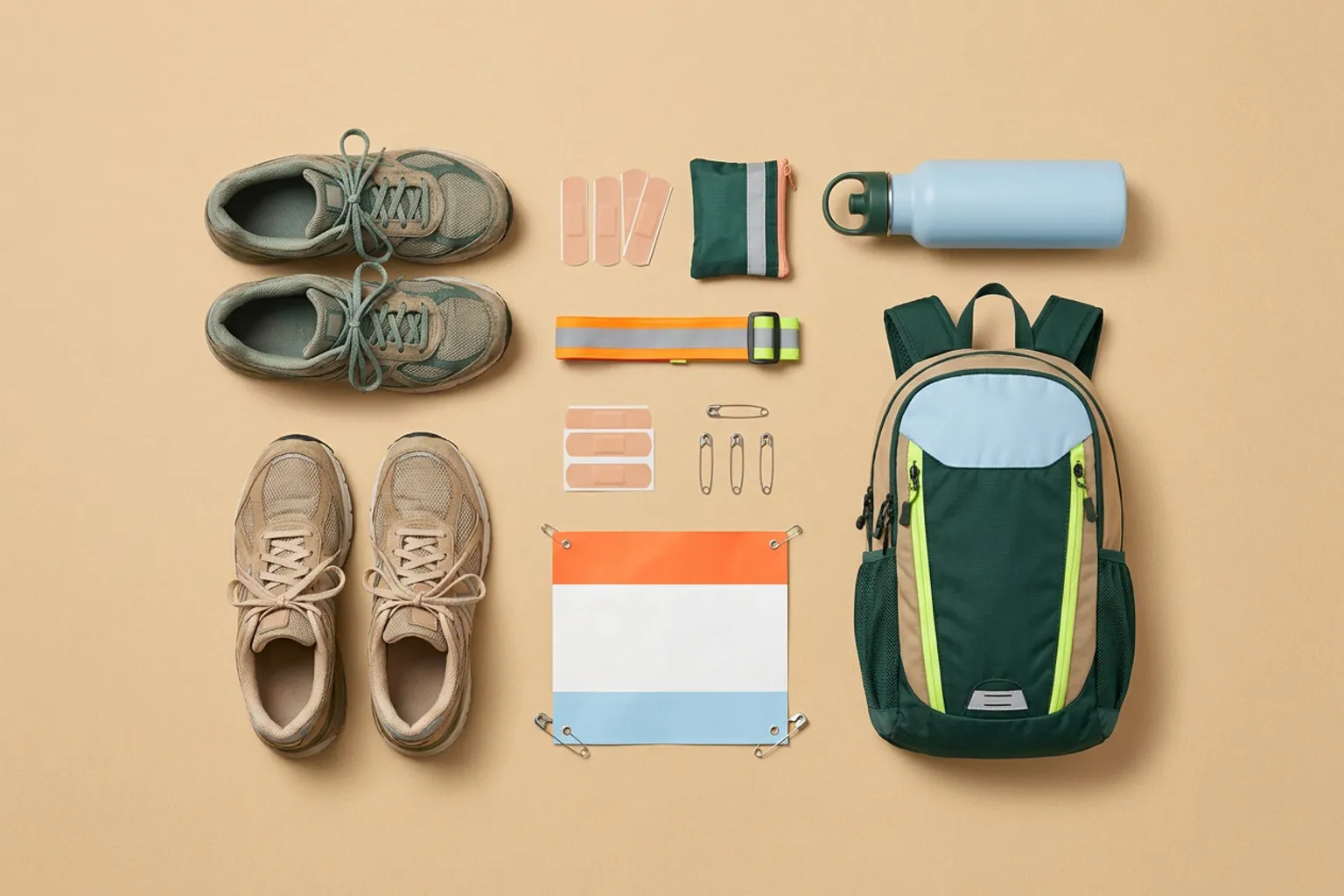
A delayed finish increases exposure to cold, tired feet, phone drain, and gaps between walkers. Move the warm layer, blister care, small snack, backup light, and event contact process into easy-reach pockets. If the planned route or road conditions change, use the organizer instructions rather than improvising a shortcut in poor visibility.
Pack for the hour after the advertised finish. That is when a compact layer, spare power, and a second light stop feeling optional.
What should night walkers leave at home?
Leave dazzling strobe modes, loose lights that swing into other walkers, dark outer layers without visible markers, untested footwear, and bulky gear with no route-specific job at home. A brighter light is not always safer if it blinds the group, hides uneven ground in glare, or leaves no battery for the final section.
Use the lowest steady mode that lets you walk confidently, then preserve higher output for crossings, signs, or difficult ground.
Compact checklist
- Main safety item for the route, season, and time of day.
- Specific plan for long pavement time, weather swings, blister build-up, phone drain, and crowded event conditions.
- Backup light or backup power if the trip can run late.
- Weather layer that works for both wind and rain.
- Small first aid and blister kit sized for the group.
- Navigation backup that does not depend only on cell service.
- Carry rule: pack for the hour after you expected to finish, when feet, weather, and battery life matter most.
Frequently asked questions
Is a headlamp enough for a night walk event?
No. A headlamp helps you see forward, but it may not make you easy to identify from behind or from the side. Add reflective material or separate visibility markers, especially near roads, crossings, and large walking groups.
Should I carry a backup light on a supported night walk?
Yes. Event support does not prevent a flat battery, accidental activation, water damage, or a light being lent to another walker. Keep a small backup in a fixed pocket and preserve your phone battery for route and contact tasks.
What color lights should a night walking group use?
Follow local rules and organizer instructions. For organized groups on UK roads, the Highway Code specifies a white light at the front and a red light at the rear, with outside walkers also carrying lights and wearing reflective clothing.
Sources
- NHTSA, Ways to Get Home Safely, retrieved July 13, 2026. Used for the 2024 darkness statistic and pedestrian visibility baseline.
- UK Highway Code, Rules for Pedestrians 1 to 35, retrieved July 13, 2026. Used for organized group positioning, reflective clothing, and front/rear light guidance.
- National Park Service, Ten Essentials , retrieved July 13, 2026. Used as the safety baseline for compact outdoor packing systems.
- American Red Cross, First Aid Kit guidance , retrieved July 13, 2026. Used for first-aid kit scope and emergency-preparedness checks.
- Fopoto Editorial Policy, updated July 13, 2026. Explains the scenario-first review method, AI-assisted image disclosure, and source standards.
- Fopoto Field Desk, updated July 13, 2026. Describes the editorial team, review boundaries, correction path, and compact-kit evaluation method behind this guide.
Updated July 13, 2026 / 6 min read