Key Takeaways
- Treat a checkpoint symbol as a question until its water, food, opening hours and withdrawal arrangements are confirmed.
- Keep the equipment needed between stops on your body or in your daypack; a finish bag cannot help halfway around.
- Include time for queues, foot checks and slower movement when checking daylight and the last usable transport.
- A shorter route or withdrawal is a valid outcome when the remaining plan no longer works.
How this guide was built
Desk-researched event-day planning guide, reviewed October 23, 2026. It combines public land-manager guidance, a named UK event example and NHS foot-care advice with an editorial checkpoint worksheet. We have not walked or audited your route, tested products, or obtained a personal medical assessment for you.
A long event day is a sequence of gaps: between usable water supplies, staffed checkpoints, safe exits and the finish. Total distance alone cannot tell you what belongs in the pack. Use this checklist for a long single-day walk on nontechnical terrain; camping, technical crossings and remote expeditions need a separate plan. The useful question at each stop is what you must be able to manage before the next confirmed opportunity.
| Route question | Personally accessible kit | Confirm before departure |
|---|---|---|
| Where is the next usable refill? | Suitable containers, water for the planned gap and an assessed contingency | Exact location, potable supply, opening time and any requirement to carry or treat water |
| What can I eat before the next stop? | Familiar ready-to-eat food that can be reached without unpacking everything | Whether food is included, sold, limited or unavailable; payment accepted |
| What if the walk runs late? | Working light, weather protection and phone power | Checkpoint closure, route cutoff, sunset and a permitted exit |
| How can I stop safely? | Offline route, contact details and payment/transport essentials | Withdrawal reporting, pickup access and a backup to the last bus or train |
| What if my feet become uncomfortable? | Previously used footwear/socks and suitable clean dressings | A place to stop and reassess; access to event help if continuing is unsuitable |
1. Read the support description as a set of specific promises
Separate mandatory kit from organizer-provided services and from things you merely hope to find. The British Heart Foundation Hike for Hearts page, for example, describes its signed and marshalled routes, rest stops and medical support, while also recommending participants bring water, snacks, medication and a charged phone. That is one UK event example, not a service standard for other walks. Read the current instructions for your own date and distance. For the basic supported-versus-self-supplied distinction, see the charity walk preparation guide .
A marshal or medical team does not remove your responsibility to understand the route or keep necessary supplies with you.
Sources for this section: BHF: Hike for Hearts event details and kit list
2. Build a checkpoint worksheet before choosing pack size
Our worksheet uses one row per section: departure point; next confirmed refill or food stop; expected time on feet; closing time; permitted exit; and a contact or transport option. Mark each fact confirmed or unknown. Recheck the longest gap after allowing for slower ground and stops, then decide what must fit in the daypack. A shop shown on an old map is not a confirmed open refill. If an essential gap cannot be planned with confidence, choose a shorter or better-supported route instead of relying on an optimistic estimate.
This is an editorial planning method, not a certified safety calculation or a guaranteed reserve formula.
3. Keep supply plans flexible without prescribing a universal amount
Decide how you will carry, access and replenish water and familiar food across those sections. Check whether a refill is suitable to drink and whether treatment is required; a nearby stream is not automatically a usable supply. Pack containers you can use, familiar ready-to-eat food and a contingency matched to your route. The quantity depends on conditions, duration and individual needs: this page does not prescribe one number of litres, calories or electrolyte products for every walker. Try accessing your chosen containers and snacks with the pack loaded before event day.
Do not use a commercial snack or hydration claim as a substitute for individual advice or the destination’s current guidance.
Sources for this section: NPS Hike Smart: water, food and route preparation
4. Make foot comfort a reason to stop and check
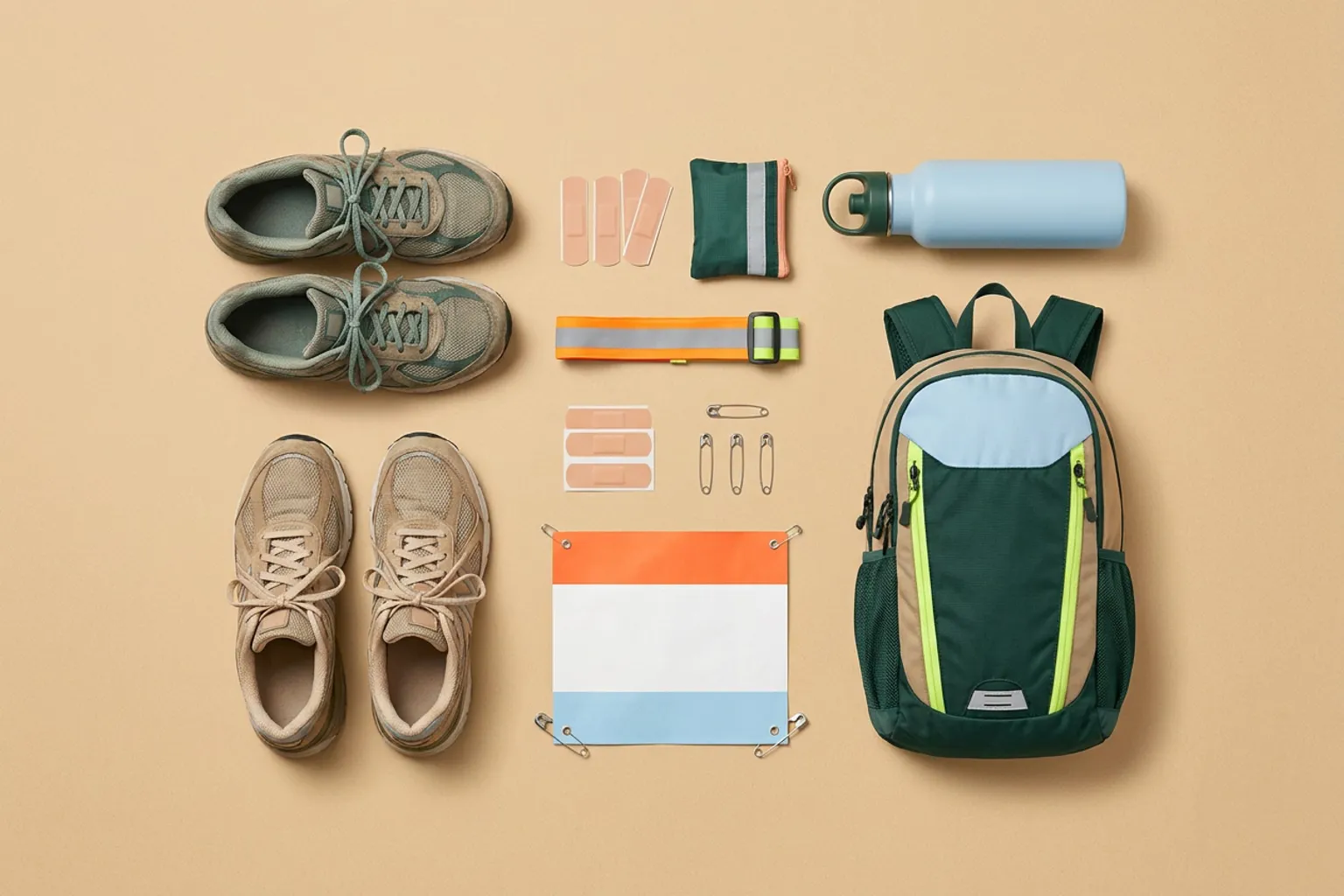
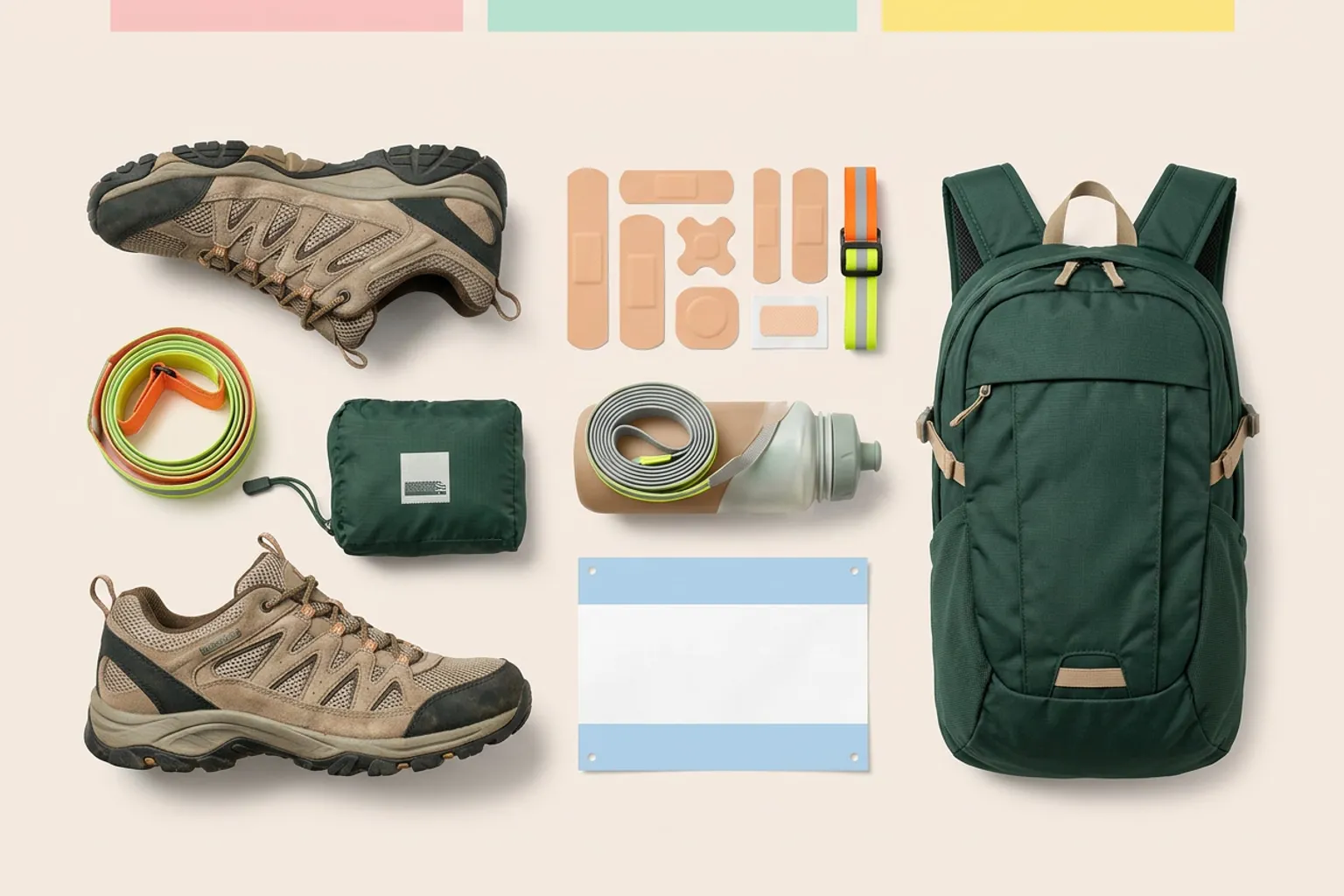
Use footwear and socks you have already worn together, check anything that rubs, and carry suitable dressings where you can reach them. NHS prevention advice supports well-fitting footwear, getting used to new shoes gradually, and changing socks when feet become sweaty. Its blister guidance says not to burst blisters yourself and to seek help for very painful, recurring or infected-looking blisters. Our event-day decision is to stop and reassess discomfort instead of treating the remaining distance as a reason to keep damaging the skin. Ask event support for help with deciding how to leave if necessary.
NHS service numbers apply in their UK setting. Outside it, use local care; this is not a procedure tutorial or individual medical clearance.
Sources for this section: NHS: Blisters—prevention, self-care and when to get help
5. Plan the slower finish, not only the advertised start
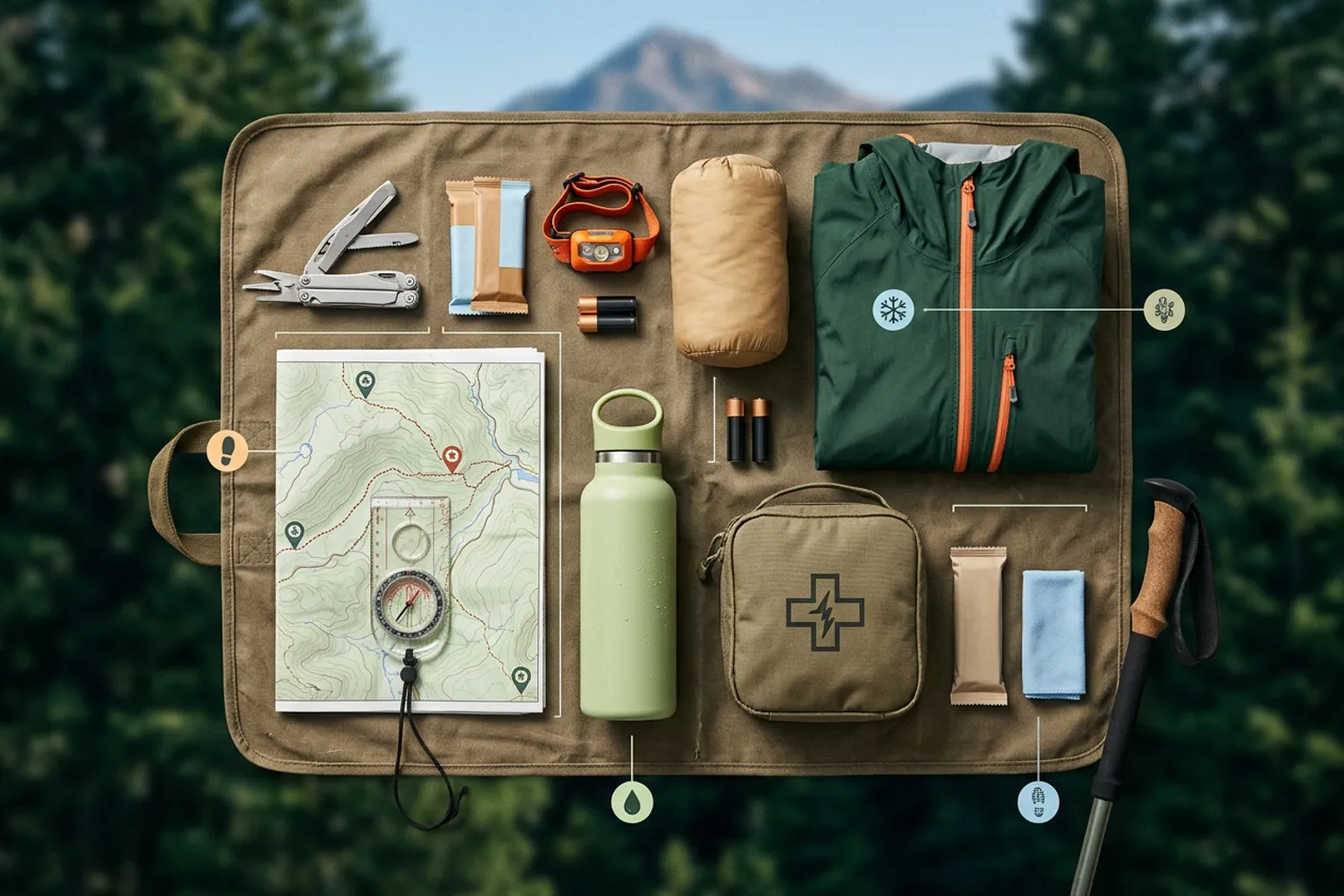
Check what your likely pace, breaks and checkpoint queues mean for the final sections. Write a point at which you will shorten the plan or leave the event, and check what happens if the next support point closes. Carry a light if a delay could put you out after dark, test its controls, and keep power for your route and contact tasks. For the distinction between lighting the ground and helping other people notice you, use the night-walking lighting guide .
A light is a fallback for delay, not permission to continue on an unsuitable route or ignore event cutoffs.
Sources for this section: Ramblers: packing for a walking holiday—lighting, navigation and power
6. Treat withdrawal and the journey home as part of the kit
Save the event contact and withdrawal procedure offline. Check which exits are permitted, whether there is actually a collection service, and whether public transport still runs at the time you might reach it. Keep any necessary payment, identification and essential personal medication with you rather than only in a finish bag. BHF publishes different transport arrangements for its two Hike for Hearts locations, illustrating why the venue matters. Our contingency is a second workable way home, or a route choice that avoids relying on a single last connection. Follow organizer instructions when withdrawing so a missed checkpoint is not mistaken for a missing walker.
No pickup, taxi availability, refund, public-transport service or event medical response is guaranteed by this guide.
Sources for this section: BHF: Hike for Hearts—getting there and event locations
7. Pack in the order you will need things
Before setting off, put the next food, water access, route and contact details where you can reach them. Keep dry layers and foot-care items protected; leave the bag reserved for the finish separate. At each support point, check the next gap, remaining daylight, supplies and how you feel before moving on. Use the walking event checklist as a final item check; the 10K walk guide covers the shorter-event version. Do not make the long-day kit a duplicate of everything in both lists.
The packing order and checkpoint review are editorial suggestions. Rehearse the setup on a manageable walk; a checklist cannot establish fitness for an event.
Before you choose
- Check the final participant instructions and required equipment for your exact event.
- Mark confirmed refill points, staffed hours and the longest unsupported section.
- Carry familiar food and a water plan suited to the route and conditions.
- Keep a working light, route information, phone power and weather layers accessible.
- Pack suitable foot-care dressings and a dry sock option that you have tried.
- Write down a permitted early exit, withdrawal procedure and transport backup.
- Recheck conditions and your remaining options before leaving each support point.
Frequently asked questions
How much water should I carry for a long walking event?
There is no quantity that suits every participant and route. Confirm the longest usable refill gap, conditions, carrying capacity and your own needs; verify what the event provides. If the plan depends on an uncertain refill, resolve it or choose a different route rather than assume it will work.
Can I leave most of my equipment at a checkpoint?
Only use an official bag-drop arrangement and follow its rules. Keep what you need between accessible support points with you. A finish or drop bag is not a substitute for on-route weather protection, navigation, personal medication or lighting if you need them.
What is different from a shorter charity or 10K walk checklist?
The long-day task is managing the sequence of unsupported gaps and a slower possible finish. Checkpoint hours, food access, foot discomfort and the return journey can change what is practical to carry. Distance alone does not determine a safe kit.
What should I do if I cannot keep to the event timetable?
Contact the organizer through the published procedure and use a permitted withdrawal option while it is still workable. An injury, unsafe conditions or credible emergency needs appropriate local help without waiting for a timetable. Do not invent a shortcut or assume somebody will collect you.
Sources
- National Park Service: Hike Smart , retrieved 2026-10-23. U.S. public land-manager preparation guidance; not approval of this event or a universal supply quantity.
- British Heart Foundation: Hike for Hearts , retrieved 2026-10-23. Named UK event example for personally carried kit, described support and venue-specific transport. Check your own event’s latest instructions.
- NHS: Blisters , retrieved 2026-10-23. UK public self-care/prevention guidance; no invasive treatment or individualized clinical advice is provided here.
- Ramblers: Packing for your walking holiday , retrieved 2026-10-23. Walking charity’s navigation, light, power and packing guidance; numerical pack, water and battery suggestions are not adopted as universal rules.
Updated October 23, 2026 / 8 min read